

Food Enzyme Industry Trends 2026: Precision Processing, Clean-Label Production and Customized Solutions
The food enzyme industry continues to develop in 2026 as manufacturers seek more efficient, consistent and application-specific processing solutions.
Food enzymes are widely used in bakery, dairy, beverage, starch processing, brewing, confectionery, protein processing and nutritional products. Their value is no longer measured only by enzyme activity. Manufacturers are increasingly evaluating stability, processing conditions, formulation compatibility and final product performance.
Precision Enzyme Selection Becomes More Important
Different food-processing systems require different enzymatic characteristics. Temperature, pH, substrate concentration, reaction time and production equipment can all influence enzyme performance.
As a result, manufacturers are moving from selecting enzymes based only on activity specifications toward complete application evaluation. Customized enzyme activity and compound enzyme solutions are becoming increasingly important for improving production consistency.
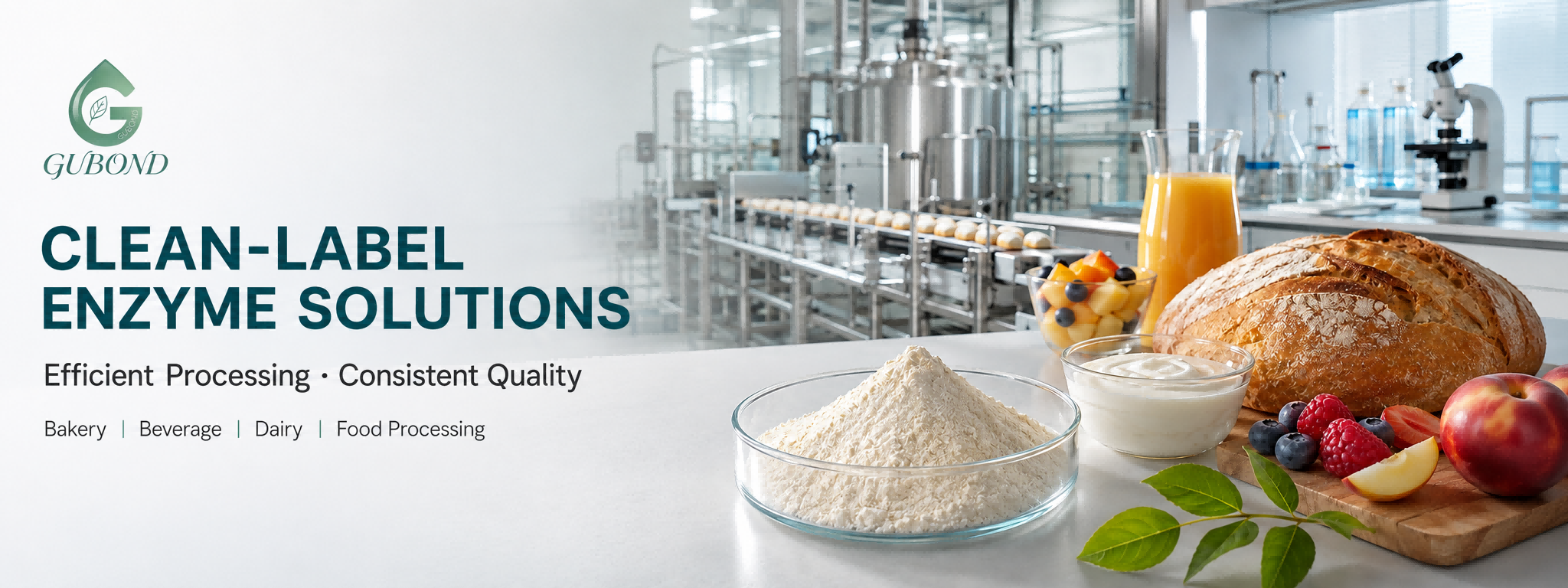
Clean-Label and Efficient Processing Support Demand
Food manufacturers continue to explore processing methods that help improve texture, flavor, yield and production efficiency while supporting simplified formulations.
Enzymes can provide specific technological functions under controlled processing conditions. For example:
-
Amylase and Xylanase support bakery and starch processing.
-
Pectinase assists fruit juice extraction and clarification.
-
Lactase is used in lactose-reduced dairy products.
-
Protease supports protein hydrolysis and flavor development.
-
Invertase catalyzes sucrose conversion in confectionery and syrup production.
-
Lipase can be applied in dairy, bakery and flavor-processing systems.
Microbial Fermentation Expands Enzyme Development
Microbial fermentation remains an important production route for food enzymes. Bacteria, yeast and fungi can be used in controlled fermentation systems to produce enzymes with targeted functions.
According to the FAO, precision fermentation can produce specific substances including proteins and enzymes. Advances in fermentation, strain selection and enzyme modification are supporting the development of products with improved stability and broader processing compatibility.
Sustainability Becomes a Processing Priority
Food producers are paying greater attention to energy use, raw-material utilization and waste reduction.
Under suitable conditions, enzyme-assisted processing can help optimize reaction efficiency, improve extraction or conversion yields and reduce the need for more intensive processing. However, the actual result depends on the enzyme, dosage and production system.
Documentation and Technical Support Matter to Buyers
For international buyers, enzyme activity is only one part of product evaluation. Product source, appearance, microbiological limits, recommended conditions, storage stability and regulatory documentation are also important.
Reliable suppliers should be able to provide COA, TDS, specifications and application guidance for quality evaluation and batch verification.
GUBOND Food Enzyme Solutions
GUBOND supplies food enzyme solutions for bakery, beverage, dairy, confectionery, starch, protein and nutritional applications.
Our product range includes Amylase, Xylanase, Pectinase, Protease, Lactase, Lipase, Invertase, Cellulase, Glucose Oxidase and compound enzyme preparations.
With strict quality control, customized activity specifications, technical documentation and responsive service, GUBOND supports manufacturers, ingredient distributors and product developers worldwide.
Professional Enzyme Solutions for Diverse Food Applications.